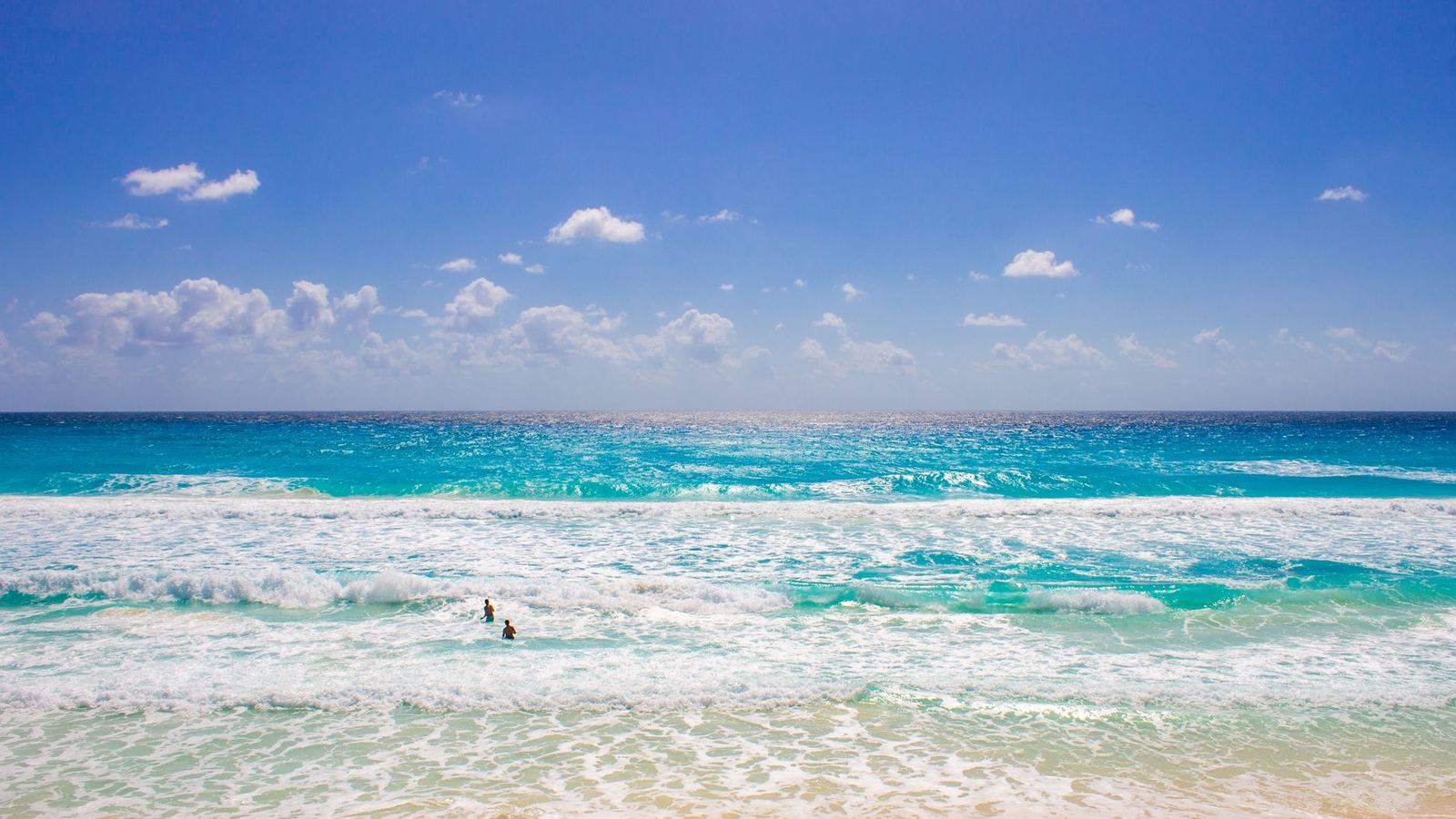
Sargassum is the brown seaweed that drifts across the Atlantic and piles up
on Caribbean beaches. Fresh, it is a nuisance. Left a few days, it rots, and
the smell is the thing that ruins a week — you are paying for a beach you can
smell from the balcony.
The scale above is a normal year on the Hotel Zone: clear through the
winter, building from April, worst from June to August. Use it to pick a month.
Then read the rest of this, because 2026 did not follow it.
Where matters more than when
The coast does not get seaweed evenly, and the difference between two hotels
forty minutes apart is bigger than the difference between two months.
Beaches that face straight into the Caribbean current take it first and
worst — Playa del Carmen and Akumal are the names that come up every time.
Beaches sheltered by the geometry of the coast do better: Isla Mujeres,
Cozumel, and the north end of the Cancún Hotel Zone. Comparing 2026 against
2025, Playa del Carmen and Akumal were noticeably worse while Isla Mujeres,
Cozumel and north Cancún held roughly level.
That is the single most useful thing on this page, and it is also why every
hotel here carries its own scale rather than a generic Cancún one.
What 2026 actually did
The University of South Florida tracks the whole Atlantic belt by satellite
and publishes a bulletin at the end of each month. Their 2026, in order:
- February — already at record highs for the month across
almost every region. In a normal year February is a safe month.
- March — satellite abundance ran roughly 15–20% above
March 2025.
- June — a record June for the Caribbean. 33.6 million
tonnes across the monitored regions, and 5 million tonnes in the Gulf,
close to double the previous record set in 2025.
- August — declining at last, but still above the 75th
percentile of historical values, with beaching continuing. The forecast
is a continued fall, possibly through November.
On the ground the same story reads differently. In March, in the run-up to
Semana Santa, the state's monitoring network counted three beaches in the whole
of Quintana Roo with no sargassum at all — and all three were on Isla Mujeres.
One of its reports scored a hundred beaches: fifty red, nine heavy, seventeen
moderate, nineteen light, five clear.
How to check it yourself, a week before you fly
There is no single official channel for beach conditions on the Mexican
Caribbean — which is worth knowing before you trust a screenshot someone posted
in a Facebook group. What exists, and is worth the ten minutes:
- USF Sargassum Watch System — the satellite view,
updated monthly. Tells you what kind of year you are flying into.
- Sargassum Monitoring — a daily
crowdsourced map built from visitors' own photographs since 2018. Tells
you what a specific beach looked like yesterday.
- Red de Monitoreo del Sargazo — the Quintana Roo
citizen network that publishes the beach-by-beach traffic light.
Read the photographs, not the colour codes. A beach can be marked moderate
and be perfectly swimmable by ten in the morning, because crews from both the
state and the hotels clear it daily — and a beach can be marked clear in a
photograph taken at the one end that was raked.
What I actually do about it with children
Pick the month if you can: December to March remains the best bet, even
after a February like this one. Pick the coast if you cannot — the north Hotel
Zone over Tulum, every time, and that is where the
hotels on this site are.
Then ask the hotel one direct question before you book: do they clear the
beach daily, and at what time. Every resort will say the beach is beautiful.
Not all of them will tell you the machines come through at six in the
morning.
And have the wet-weather plan ready, because seaweed is exactly like rain:
a pool day, a cenote, a boat to Isla Mujeres. A week is only ruined if the
beach was the entire plan. The
month-by-month scales for each stretch of coast are on
their own page, including Tulum and Playa del Carmen for comparison.